


About
Description
High-Performance CoreXY 3D Printer
Bambu Lab P2S
A compact enclosed CoreXY 3D printer that combines high-speed motion, stable extrusion, intelligent monitoring and support for standard, engineering and composite filaments.
256 mm³
256 × 256 × 256 mm build volume
300°C
Maximum nozzle temperature
110°C
Maximum heated-bed temperature
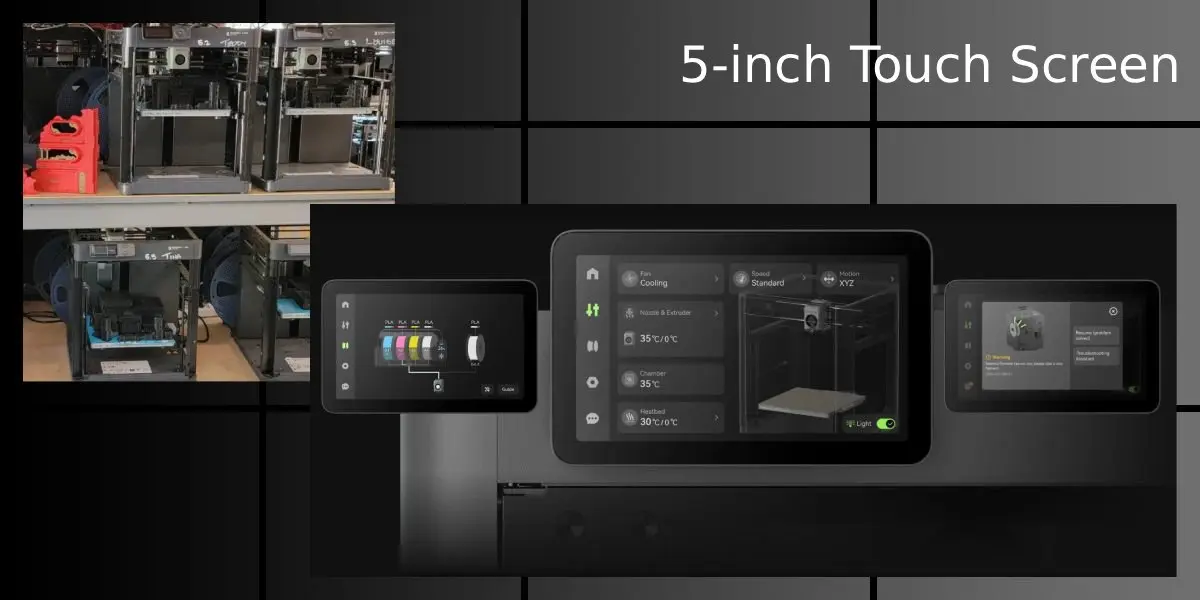
5″
Second-generation touchscreen interface
Core Capabilities
Fast, Accurate and Ready for Advanced Materials
The P2S combines CoreXY motion, a servo-driven PMSM extruder, enclosed construction and intelligent process monitoring to support reliable printing across a wide range of applications.
High-Speed CoreXY
The CoreXY motion system supports fast and precise print-head movement while keeping the printer compact.
Servo PMSM Extruder
The servo-driven extruder provides force up to approximately 8.5 kg for more stable filament feeding.
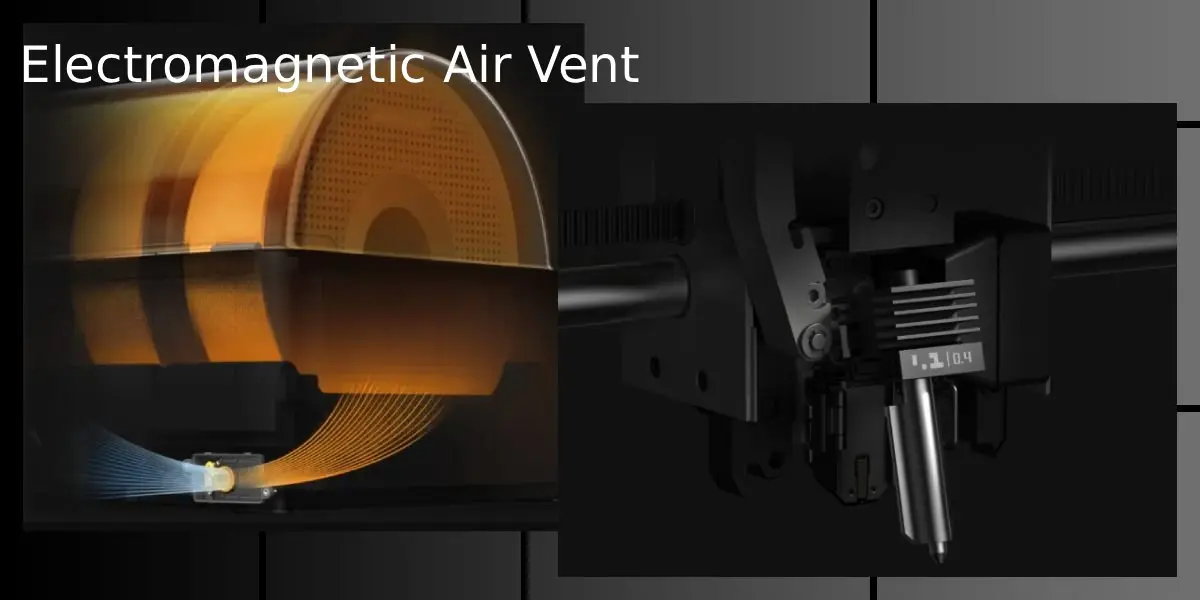
Adaptive Airflow
The enclosed chamber and carbon-filter airflow system help control temperature and filter the air.
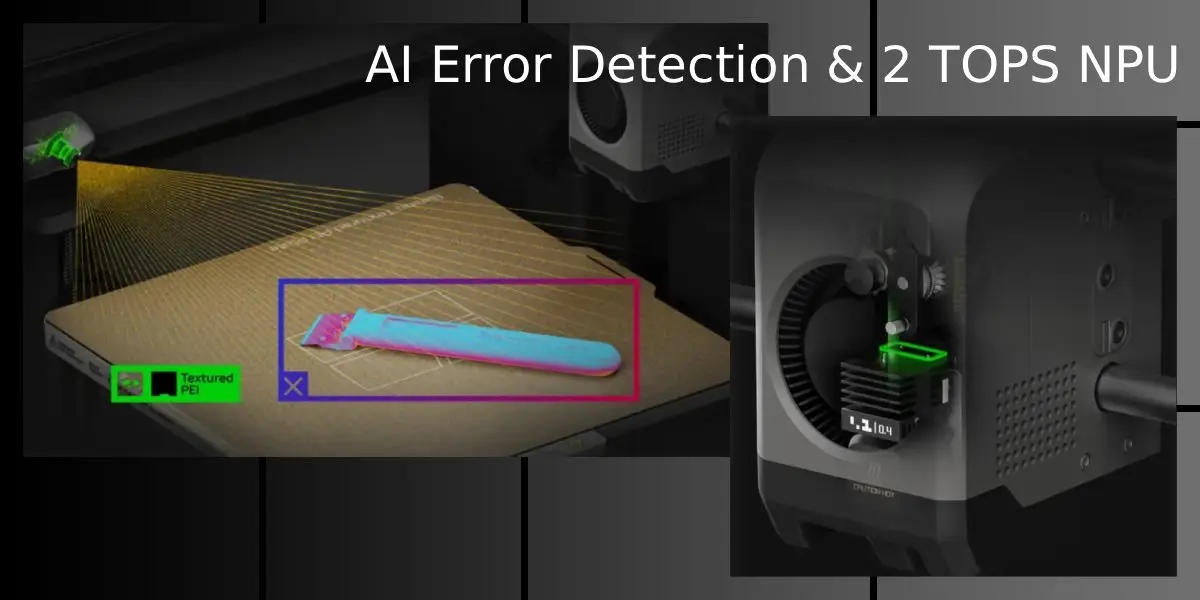
AI Print Monitoring
Integrated monitoring helps identify issues such as spaghetti printing and nozzle-related failures.
1080p Camera
The built-in camera with lighting supports remote monitoring and timelapse recording.
Engineering Material Support
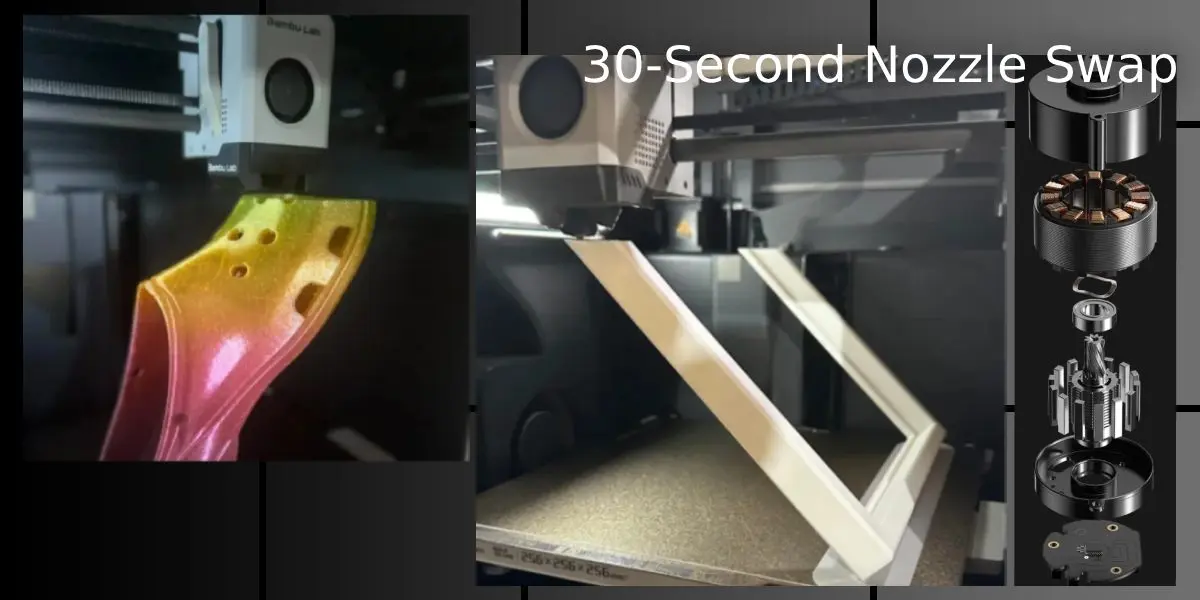
The hardened-steel nozzle and 300°C hotend support standard, engineering and reinforced filaments.
P2S vs P2S Combo
The Printer Without AMS 2 Pro
The P2S includes the complete printer platform. The P2S Combo adds AMS 2 Pro for automatic filament changing, drying and multi-color or multi-material printing. AMS 2 Pro is not included with the standard P2S.
P2S
Printer only
P2S Combo
Printer + AMS 2 Pro
Applications
From Prototyping to Small-Batch Production
Functional Prototyping
Create accurate test parts and functional samples during product development.
Small-Batch Production
Produce final-use components from standard, engineering and composite filaments.
Education & Laboratories
The enclosed design and automated functions support structured training and research.
Workshops & Design Studios
Suitable for models, accessories, robot and drone parts, fixtures and customized objects.
Technical Specifications
Bambu Lab P2S
Printing System
| Build Volume | 256 × 256 × 256 mm |
| Motion System | CoreXY |
| Maximum Nozzle Temperature | 300°C |
| Maximum Bed Temperature | 110°C |
| Default Nozzle | 0.4 mm hardened steel |
| Supported Nozzles | 0.2 mm, 0.4 mm, 0.6 mm and 0.8 mm |
Extrusion & Materials
| Extruder | Servo PMSM, force up to approximately 8.5 kg |
| Supported Materials | PLA, PETG, TPU, ABS, ASA, PA, PC and composites |
| Composite Support | Carbon- and glass-fiber reinforced filaments |
| Airflow System | Adaptive Airflow with carbon filtration |
Monitoring & Interface
| Camera | 1080p camera with lighting |
| Remote Monitoring | Supported |
| Timelapse | Supported |
| AI Failure Detection | Supported |
| Touchscreen | 5-inch, second-generation interface |
Dimensions & Package
| Physical Dimensions | Approximately 392 × 406 × 478 mm |
| Weight | Approximately 14.9 kg |
| Contents | P2S 3D printer |
| Included Build Plate | Textured PEI plate |
| AMS 2 Pro | Not included |
Filament Guidance
Choosing Materials
PLA
A practical starting point for learning the printer and producing visual prototypes.
PETG & ASA
Suitable for stronger parts, outdoor use and improved resistance to heat or UV exposure.
TPU
Use slower loading and conservative motion settings to reduce the risk of flexible filament jamming.
Composites
Use hardened nozzles and suitable profiles for carbon- or glass-fiber reinforced materials.
RFID Spools
Compatible manufacturer spools can be recognized automatically; third-party filament can be configured manually.
Build Plate Adhesion
For demanding materials, use a suitable adhesive layer or a compatible specialized build plate.
The standard P2S package includes the printer only. AMS 2 Pro is available separately
or as part of the P2S Combo configuration.
Description
High-Performance CoreXY 3D Printer
Bambu Lab P2S
A compact enclosed CoreXY 3D printer that combines high-speed motion, stable extrusion, intelligent monitoring and support for standard, engineering and composite filaments.
256 mm³
256 × 256 × 256 mm build volume
300°C
Maximum nozzle temperature
110°C
Maximum heated-bed temperature
5″
Second-generation touchscreen interface
Core Capabilities
Fast, Accurate and Ready for Advanced Materials
The P2S combines CoreXY motion, a servo-driven PMSM extruder, enclosed construction and intelligent process monitoring to support reliable printing across a wide range of applications.
High-Speed CoreXY
The CoreXY motion system supports fast and precise print-head movement while keeping the printer compact.
Servo PMSM Extruder
The servo-driven extruder provides force up to approximately 8.5 kg for more stable filament feeding.
Adaptive Airflow
The enclosed chamber and carbon-filter airflow system help control temperature and filter the air.
AI Print Monitoring
Integrated monitoring helps identify issues such as spaghetti printing and nozzle-related failures.
1080p Camera
The built-in camera with lighting supports remote monitoring and timelapse recording.
Engineering Material Support
The hardened-steel nozzle and 300°C hotend support standard, engineering and reinforced filaments.
P2S vs P2S Combo
The Printer Without AMS 2 Pro
The P2S includes the complete printer platform. The P2S Combo adds AMS 2 Pro for automatic filament changing, drying and multi-color or multi-material printing. AMS 2 Pro is not included with the standard P2S.
P2S
Printer only
P2S Combo
Printer + AMS 2 Pro
Applications
From Prototyping to Small-Batch Production
Functional Prototyping
Create accurate test parts and functional samples during product development.
Small-Batch Production
Produce final-use components from standard, engineering and composite filaments.
Education & Laboratories
The enclosed design and automated functions support structured training and research.
Workshops & Design Studios
Suitable for models, accessories, robot and drone parts, fixtures and customized objects.
Technical Specifications
Bambu Lab P2S
Printing System
| Build Volume | 256 × 256 × 256 mm |
| Motion System | CoreXY |
| Maximum Nozzle Temperature | 300°C |
| Maximum Bed Temperature | 110°C |
| Default Nozzle | 0.4 mm hardened steel |
| Supported Nozzles | 0.2 mm, 0.4 mm, 0.6 mm and 0.8 mm |
Extrusion & Materials
| Extruder | Servo PMSM, force up to approximately 8.5 kg |
| Supported Materials | PLA, PETG, TPU, ABS, ASA, PA, PC and composites |
| Composite Support | Carbon- and glass-fiber reinforced filaments |
| Airflow System | Adaptive Airflow with carbon filtration |
Monitoring & Interface
| Camera | 1080p camera with lighting |
| Remote Monitoring | Supported |
| Timelapse | Supported |
| AI Failure Detection | Supported |
| Touchscreen | 5-inch, second-generation interface |
Dimensions & Package
| Physical Dimensions | Approximately 392 × 406 × 478 mm |
| Weight | Approximately 14.9 kg |
| Contents | P2S 3D printer |
| Included Build Plate | Textured PEI plate |
| AMS 2 Pro | Not included |
Filament Guidance
Choosing Materials
PLA
A practical starting point for learning the printer and producing visual prototypes.
PETG & ASA
Suitable for stronger parts, outdoor use and improved resistance to heat or UV exposure.
TPU
Use slower loading and conservative motion settings to reduce the risk of flexible filament jamming.
Composites
Use hardened nozzles and suitable profiles for carbon- or glass-fiber reinforced materials.
RFID Spools
Compatible manufacturer spools can be recognized automatically; third-party filament can be configured manually.
Build Plate Adhesion
For demanding materials, use a suitable adhesive layer or a compatible specialized build plate.
The standard P2S package includes the printer only. AMS 2 Pro is available separately
or as part of the P2S Combo configuration.
Bambu Lab
by
Bambu Lab
Bambu Lab P2S 3D Printer Gray
SKU:
PF004-U-US
- Regular price
- $549.00
- Sale price
- $549.00
- Regular price
-
$549.00
Shipping calculated at checkout.
Providing the best new Tech Experience, Energy Independence and Robotics Ways of Optimisation
Providing the best new Tech Experience, Energy Independence and Robotics Ways of Optimisation
Packaging note:
Equipment is being supplied in a manufacturer packaging


