


Why Choose Unitree Sensors & Vision Modules
- Advanced Perception & Awareness: Equip robots with accurate depth sensing, environmental mapping and real-time object detection for intelligent operation.
- Autonomous Navigation & Localization: Enable reliable SLAM, obstacle avoidance and positioning using professional-grade LiDAR and vision technologies.
- Flexible Integration & Scalability: Easily integrate sensors into Unitree robots, ROS environments and custom robotic platforms for research, development and commercial deployment.
- Project Consultation & Solution Selection: Not sure which sensor, camera or LiDAR is right for your application? Our specialists can help evaluate your technical requirements and recommend the optimal perception system for your project.
Powering Intelligent Perception for Autonomous Systems
Advanced sensing technologies are at the core of every intelligent robotic system. From LiDAR-based navigation and 3D mapping to depth perception and machine vision, Unitree sensors help robots understand, interpret and interact with the world around them. Whether you're developing autonomous platforms, AI-powered applications, research projects or industrial automation solutions, these perception modules provide the accuracy, reliability and real-time environmental awareness required for next-generation robotics.


-
Unitree L2 LiDAR spare parts for Go2

 Vendor:Unitree
Unitree L2 LiDAR spare parts for Go2
- Regular price
- $550.00
- Sale price
- $550.00
- Regular price
-
-
Unitree G1 Dual-DOF Head Module with RealSense D455 Depth Camera for Humanoid Robot
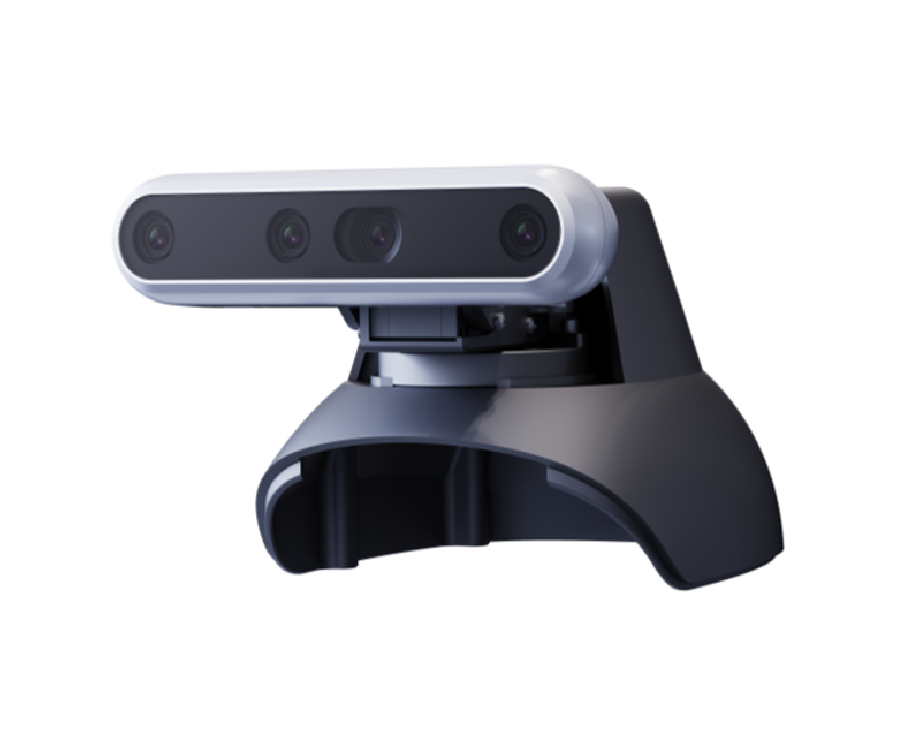 Vendor:Unitree
Unitree G1 Dual-DOF Head Module with RealSense D455 Depth Camera for Humanoid Robot
- Regular price
- $3,800.00
- Sale price
- $3,800.00
- Regular price
-
-
Unitree XT16 LiDAR for Go2-W
 Vendor:Unitree
Unitree XT16 LiDAR for Go2-W
- Regular price
- $5,900.00
- Sale price
- $5,900.00
- Regular price
-
-
Unitree L1 RM LiDAR (Remote Measurement)
 Vendor:Unitree
Unitree L1 RM LiDAR (Remote Measurement)
- Regular price
- $559.00
- Sale price
- $559.00
- Regular price
-
-
Unitree L1 PM LiDAR (Precision Measurement)
 Vendor:Unitree
Unitree L1 PM LiDAR (Precision Measurement)
- Regular price
- $450.00
- Sale price
- $450.00
- Regular price
-
-
Unitree Helios 5515 Lidar
 Vendor:Unitree
Unitree Helios 5515 Lidar
- Regular price
- $12,400.00
- Sale price
- $12,400.00
- Regular price
-


FAQ
What is the difference between LiDAR and depth cameras?
LiDAR sensors use laser technology to measure distances with exceptional accuracy and reliability, making them ideal for mapping, navigation and autonomous mobility. Depth cameras capture 3D visual information and are commonly used for:
- Object detection
- Human tracking
- Gesture recognition
- AI vision applications
- Robotic manipulation
Many advanced robotic systems combine both technologies for maximum environmental awareness.
Which sensor is best for autonomous navigation?
The optimal solution depends on the application. For most autonomous robots:
- LiDAR provides highly accurate mapping and localization
- Depth cameras improve object recognition and close-range perception
- Combined systems deliver the highest level of navigation performance
Our specialists can recommend the best configuration based on your project requirements.
Are Unitree sensors compatible with third-party robots?
Yes. Many Unitree sensors and perception modules can be integrated into custom robotic platforms and third-party systems. Typical applications include:
- Mobile robots
- Research platforms
- Industrial automation systems
- Autonomous vehicles
- AI development projects
Compatibility may vary depending on hardware and software requirements.
Can these sensors be used for AI and machine learning projects?
Absolutely. Unitree perception systems are widely used in AI, robotics and automation projects where reliable environmental awareness and real-world data are essential. They support applications such as computer vision research, autonomous navigation, object recognition, human-robot interaction and reinforcement learning, helping developers train, test and deploy intelligent systems with greater accuracy and confidence.
What industries use robotic vision and LiDAR systems?
Sensor and perception technologies are widely used across:
- Robotics and automation
- Manufacturing
- Logistics and warehousing
- Security and surveillance
- Research institutions
- Smart infrastructure projects
- Autonomous vehicle development
These systems help improve safety, efficiency and autonomous capabilities in complex environments.
- Choosing a selection results in a full page refresh.